
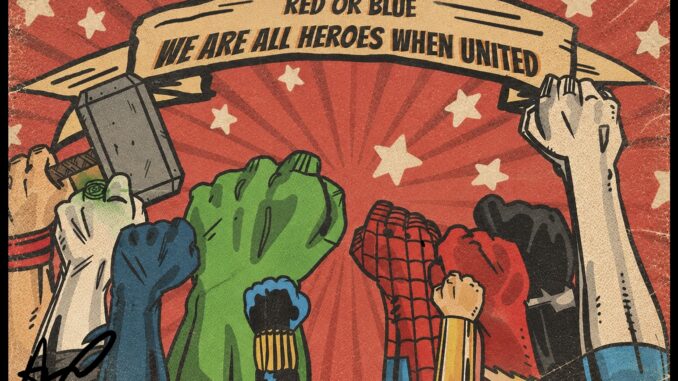
By Anthony Lopez Multimedia Reporter
Before the world was familiar with characters such as Groot, Black Panther, the Human Torch and even Wolverine, the idea of superheroes being anything other than children’s entertainment was considered abnormal. Fortunately, the mainstream interest in superheroes would inevitably change as opposed to that of the early 1950’s.
When Timely Comics officially rebranded as Marvel Comics in 1961, the release of “The Fantastic Four,” promoted as “The World’s Greatest Comic Magazine,” sparked a widespread interest in sequential storytelling. The series helped reshape not only the reputation of comic book storytelling but also the way fictional adventures could appeal to audiences of all ages.
Through the consistent evolution synonymous with comic books, Hollywood inevitably began building on what earlier superhero films had established, and by 1998, the release of “Blade,” starring Wesley Snipes, opened the door for future adaptations of comic book characters. This contributed to the development of the superhero film becoming a major cinematic genre, and with the release of “The Avengers” (2012) the idea of a connected on-screen universe was born.
For several years, Paramount, Universal and 20th Century Fox were among the studios responsible for bringing Marvel characters to the silver screen. However, regardless of the adaptation, the idea that a cohesive story could unfold over time through a shared films had yet to be fully explored on the scale Marvel would
eventually pursue.
When “Iron Man”
premiered in 2008, audiences were largely unfamiliar with the idea of interconnected superhero films outside the traditional franchise model. Although properties such as “Harry Potter” and “The Lord of the Rings” had already demonstrated the appeal of stories spanning multiple installments, Marvel’s ambitions offered something different: a cinematic universe in which individual movies converged into a
single, larger narrative.
Over the next 4 years, Marvel Studios established a connected film universe that reflected the intricate storytelling as well as interconnected continuity that had long defined comic books. This ambitious business strategy attracted widespread attention and demonstrated how effective storytelling would grow in popularity through careful planning, and digestible details that evolved character development spanning
nearly 10 years.
“The Avengers” (2012) was the culmination of five previous films introducing essential members of the titular team. Before the Avengers became household names as a cinematic ensemble, many of the characters were considered less prominent heroes compared with popular comic book icons such as the X-Men and Spider-Man even being labeled
“B-tier Heroes,” by longtime
comic enthusiasts.
The film relies on the context established by an already developed story, rewarding audiences who stayed consistent in following the five earlier movies with a gratifying payoff. It brings together Chris Evans as Captain America, Robert Downey Jr. as Iron Man, Chris Hemsworth as Thor, Scarlett Johansson as Black Widow, Jeremy Renner as Hawkeye and Mark Ruffalo as Incredible Hulk.
The conclusion of Marvel’s Phase One centers on a newly assembled team struggling to understand one another while working together to stop Loki’s attack on New York City, and although the film may seem relatively straightforward compared with the many installments that followed, its authenticity and commitment to expanding Marvel’s larger narrative demonstrate why the company’s approach to storytelling continues to resonate
with audiences.
“The Avengers” grossed approximately $1.52 billion worldwide, proving that the ambitious concept of a shared cinematic universe could successfully bring multiple franchises together within a single narrative.
More than a box-office success, “The Avengers” revolutionized the superhero genre and helped shift Hollywood’s storytelling approach from largely isolated sequels toward interconnected, world-building adventures capable of spanning several decades. With the idea of larger, more complex stories, Marvel had now demonstrated that individual stories could stand on their own while contributing to something undoubtedly
much greater.
What I understand to be so appealing about the shift in film making since the introduction of the MCU is not only the entertainment that continues to keep audiences engaged, but the history behind artists like myself, changing the way stories are told, as well as the morals of leading those who may not always have a strict path. Understanding how even the strongest of heroes are flawed is what makes these films so compelling, and while not everyone may enjoy the message behind what it takes to be a hero, the narrative of remaining strong for those around you is what undoubtedly forwards those who continue to support these movies.
Since The Walt Disney Company’s announcement of the acquisition of Marvel Entertainment in 2009, Marvel’s cultural presence has continued to reach audiences around the world. Its stories have inspired generations of fans to find comfort, excitement and overall refuge in the true meaning of entertainment. Without question, the enduring appeal of these fictional heroes has encouraged audiences to reflect on what it means to be a hero.
Leave a Reply