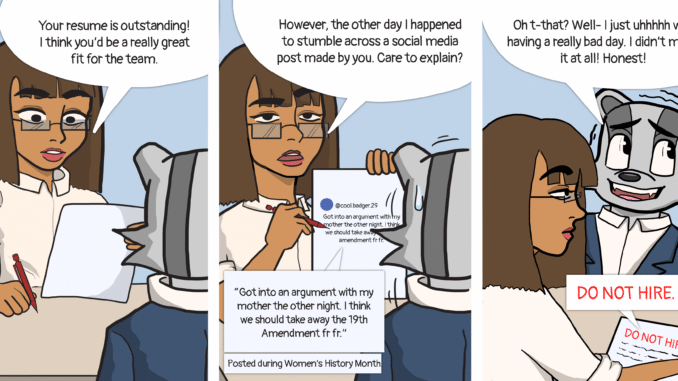
In today’s world, it’s more important than ever for people to be mindful of how they present themselves online and what gets posted or shared to social media.
Tools like the Wayback Machine, a digital archive that acts almost like a time-capsule for the internet by saving webpages allowing anyone, including future employers, to revisit posts, photos, or comments that were deleted years ago, making one thing abundantly clear, whatever gets posted online can live on forever.
Because of this, we, The Ranger staff, want to remind everyone that our digital footprint goes far beyond a quick argument in a Facebook group or a retweeted opinion shared as an angsty teenager.
In 2020, former actor Hartley Sawyer was fired from the TV series, “The Flash” after some of his offensive tweets from 2009–2012 resurfaced, effectively ending his career, hence the word, “former” before actor. Situations like his only reiterate that what we say online can follow us for years.
According to online career platform, Zety, careers can actually be derailed before they even start, because employers often check social media pages to see what their applicants post and how they represent themselves online. Meaning, hiring decisions are being shaped more than ever by a person’s online presence.
As social media becomes more and more intertwined with nearly every aspect of our lives, understanding how to navigate the digital world is no longer optional, it is essential. Media literacy involves more than just spotting fake news. It includes recognizing bias, evaluating the credibility of sources, understanding how algorithms shape what users see and being aware of how online behavior influences real-world opportunities.
Strong media literacy skills help protect all of us from misunderstandings, misinformation and what many people refer to as “cancel culture.” Since digital communication affects every major and career path, we, The Ranger staff, believe that media literacy courses deserve a place in the core curriculum. Because whether a student is studying nursing, business, welding or mass communication, understanding how to evaluate information and manage online presence is a skill that benefits everyone.
Cornell University recommends that social media users pause before posting. Check sources, consider how messages might be interpreted and avoid any unclear communication that could be misread.
So, be intentional. All sources should be verified, audiences considered and long-term consequences taken seriously. A digital footprint becomes part of our identity, and it is worth ensuring that it represents us well.
Leave a Reply